
On this page
Why do gutters sag?
| Cause | Sign | Fix |
|---|---|---|
| Spikes pulled out | Gap between gutter and fascia at the spike | Replace with screw-in hangers |
| Hangers too far apart | Gutter droops between hangers | Add hangers at 24 inches or closer |
| Rotten fascia | Hangers pull out; wood is soft | Replace fascia, then rehang |
| Ice load | Sags appear after a freeze | Rehang; consider heavier coil and closer hangers |
| Debris weight | Sags where leaves collect | Clean; consider guards |
| Ladder damage | Bent lip and hanger at one spot | Replace hanger or section |
| Limb strike | Kinked gutter | Replace section |
How is a sagging gutter fixed?
- Inspect the run from end to end for kinks, loose hangers and gaps.
- Probe the fascia where hangers will go.
- Replace rotten wood if found.
- Snap a pitch line for a steady fall to the outlet.
- Lift the gutter to the line and fasten new hidden hangers with screws into sound wood.
- Remove old spikes and fill the holes.
- Check joints that may have opened when the gutter sagged; reseal them.
- Water test to confirm water runs to the outlet.
Hangers compared
| Hanger | How it holds | Notes |
|---|---|---|
| Spike and ferrule | Long nail through the gutter into the fascia | Common on older K-style; loosens over time |
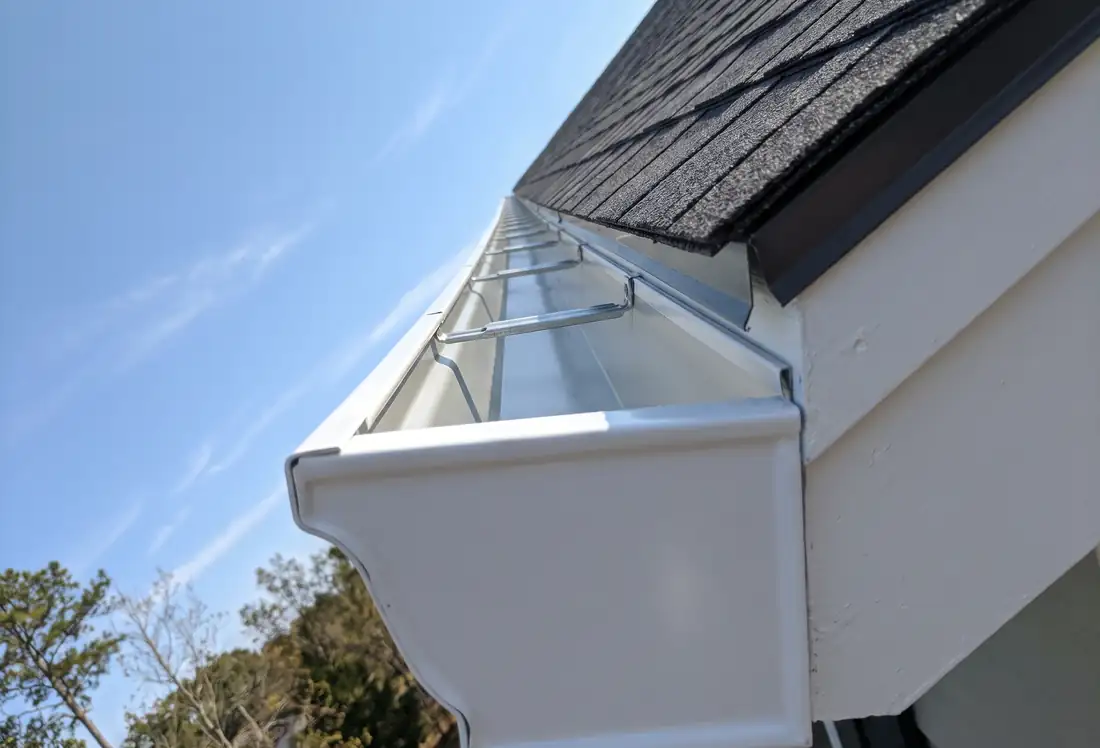
| Hidden hanger | Clips inside the front lip, screws into fascia | Standard on seamless gutters today |
| Strap hanger | Strap nailed under the roofing | Used on half-round and where fascia is weak; needs roof work |
| Bracket | Exposed bracket under the gutter | Half-round and decorative systems |
Why sagging is common in Richmond
Freeze and thaw. Richmond's winters cross the freezing point again and again, and a storm like January 2026's left three to five inches of snow and sleet with icy days afterward. Each cycle works spikes a little looser, and a gutter full of ice is much heavier than an empty one.
Leaves. A trough full of wet willow oak leaves weighs far more than an empty gutter. Gutters under the city's oak and maple canopy carry that weight every fall.
Old fascia. Many houses in the city and inner suburbs are 60 to 120 years old. Paint fails, water gets in, and the fascia softens behind the gutter.
Storms. Limbs falling in storms like the 2012 derecho bend gutters and hangers at the point of impact.
When a sag means replacement
- The gutter is kinked or creased, not just drooping.
- The system is old sectional or steel with many other problems.
- Sags appear on most runs.
- The fascia behind most of the house needs replacing anyway.
See repair or replace gutters.
Cost factors
- Length of run to rehang
- Number of hangers
- Fascia replacement
- Height and access
- Sections replaced if kinked
See fascia and soffit repair and storm damage.
Why does a sag get worse every year?
Once a run sags, water and debris collect at the low point. The extra weight pulls the nearest hangers further down, the water freezes in winter and adds more weight, and the fascia behind the low point stays wet and softens. A small sag left alone tends to become a large one, then a gutter that pulls away from the house.
Rehang or replace?
| Condition | Usually |
|---|---|
| Straight gutter, loose spikes, sound fascia | Rehang on hidden hangers |
| Kinked or creased section | Replace that section or run |
| Sound gutter, rotten fascia | Fascia repair, then rehang |
| Old sectional gutter sagging and leaking at seams | Replace with seamless |
What correct pitch looks like
A gutter should fall steadily toward each outlet, about a quarter inch for every 10 feet. Too little fall leaves water standing; too much looks crooked from the street and can make water rush past an outlet. On long runs, pitching both ways from the middle to two outlets keeps the gutter close to level along the eave while still draining.