
On this page
Parts of the roof edge
| Part | What it is |
|---|---|
| Fascia | Vertical board at the end of the rafters; gutters fasten here |
| Soffit | Underside of the overhang; often vented |
| Rafter tails | Ends of the roof rafters behind the fascia |
| Sub-fascia | Inner board on some houses, behind a finish fascia |
| Drip edge | Metal flashing at the roof edge |
| Gutter apron | Flashing that bridges the gap from roof to gutter |
| Frieze board | Trim where the soffit meets the wall |
| Crown or bed molding | Decorative trim on older cornices |
How is fascia and soffit repaired?
- Remove the gutter along the damaged section.
- Probe the wood to find where the rot ends.
- Cut out bad boards back to sound wood, and check rafter tails.
- Repair rafter tails by sistering if they are soft.
- Install new fascia and soffit, primed on all sides or in PVC or composite, matching profiles where needed.
- Add drip edge or gutter apron so water lands in the gutter.
- Paint or wrap as agreed.
- Rehang the gutter on hidden hangers into the new wood.
Why roof edges rot in Richmond
Humidity and rain. About 45.5 inches of precipitation a year, per the NWS normals, and humid summers keep wood damp longer.
Clogged gutters. Willow oaks, maples and sweetgums fill gutters every fall. Water that cannot reach the outlet goes over the back of the gutter and down the fascia.
Ice. Water held in a frozen gutter backs up under the shingles and soaks the roof edge.
Old houses. Many city houses have original wood cornices more than a century old. Paint failure is the usual start of rot.
Signs of trouble
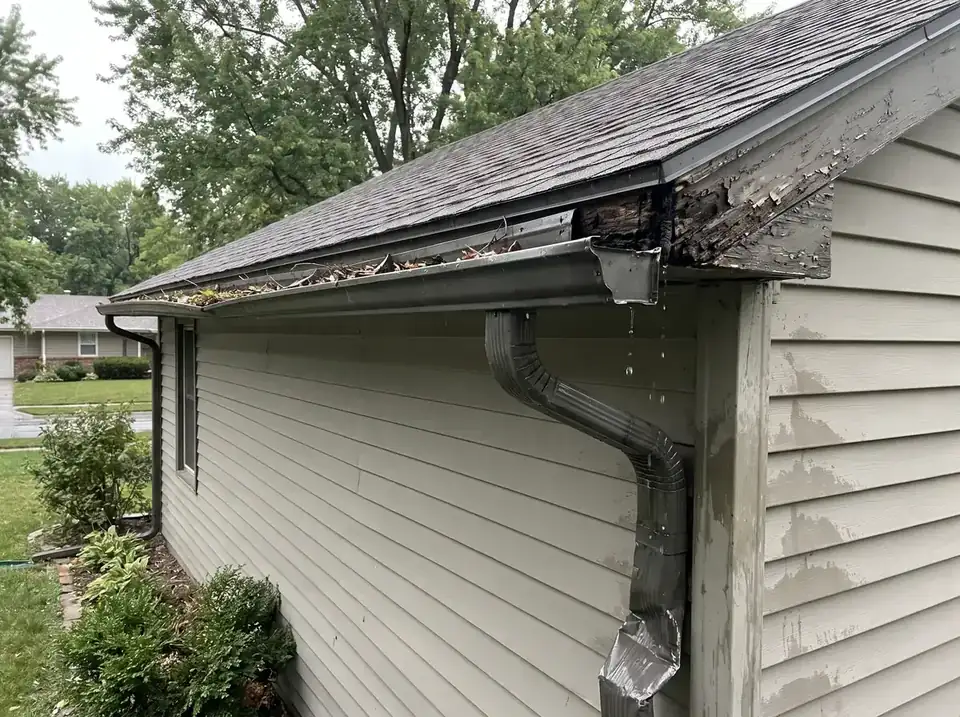
- Peeling or blistered paint on the fascia
- Dark stains on the fascia or soffit
- Gutters pulling away, with screws or spikes loose
- Sagging soffit panels
- Wasps, birds or squirrels in the eaves
- Soft wood when pressed with a screwdriver
Materials
| Material | Pros | Cons |
|---|---|---|
| Primed wood | Matches historic profiles, paintable | Needs paint every several years |
| PVC trim | Does not rot | Moves with temperature; profiles limited |
| Fiber cement | Durable, paintable | Heavier, needs care cutting |
| Aluminum wrap | Low maintenance over sound wood | Hides rot if wood beneath is bad |
| Vinyl soffit | Low cost, vented | Not appropriate on historic houses |
Historic houses
On a historic house, the cornice is often decorative, with crown and bed moldings, brackets or dentils. In a City Old and Historic District, the Commission of Architectural Review expects new trim to match the original. A good carpenter can run matching profiles.
Many of these houses also have a box gutter built into the cornice, and rotten fascia on those houses often means the box lining has failed.
Cost factors
- Length of fascia and soffit replaced
- Rafter tail repair
- Material choice
- Matching historic profiles
- Painting
- Drip edge and gutter rehang
- Height and access
How far does fascia rot usually spread?
Rot tends to start at corners and behind leaking miters, then spread along the board. By the time paint peels, the wood behind is often soft for a foot or two beyond what is visible. A contractor probing with an awl or screwdriver finds the real extent, and replacing back to sound wood avoids a second repair a year later.
What to fix at the same time
| While the gutter is off | Why |
|---|---|
| Add or extend drip edge | Stops water running behind the new gutter |
| Check rafter tails | Soft ends will not hold new fascia |
| Seal gaps in the soffit | Keeps out wasps, birds and squirrels |
| Prime all sides of new wood | Slows the next round of rot |
| Check the first row of shingles | Damaged edges let water in |
Choosing a finish
On historic houses, primed and painted wood that matches the original profile is usually right. On other houses, PVC fascia or wood wrapped in aluminum over sound wood reduces painting. Wrapping rotten wood only hides the problem until the gutter starts pulling loose again.