
On this page
Why aluminum?
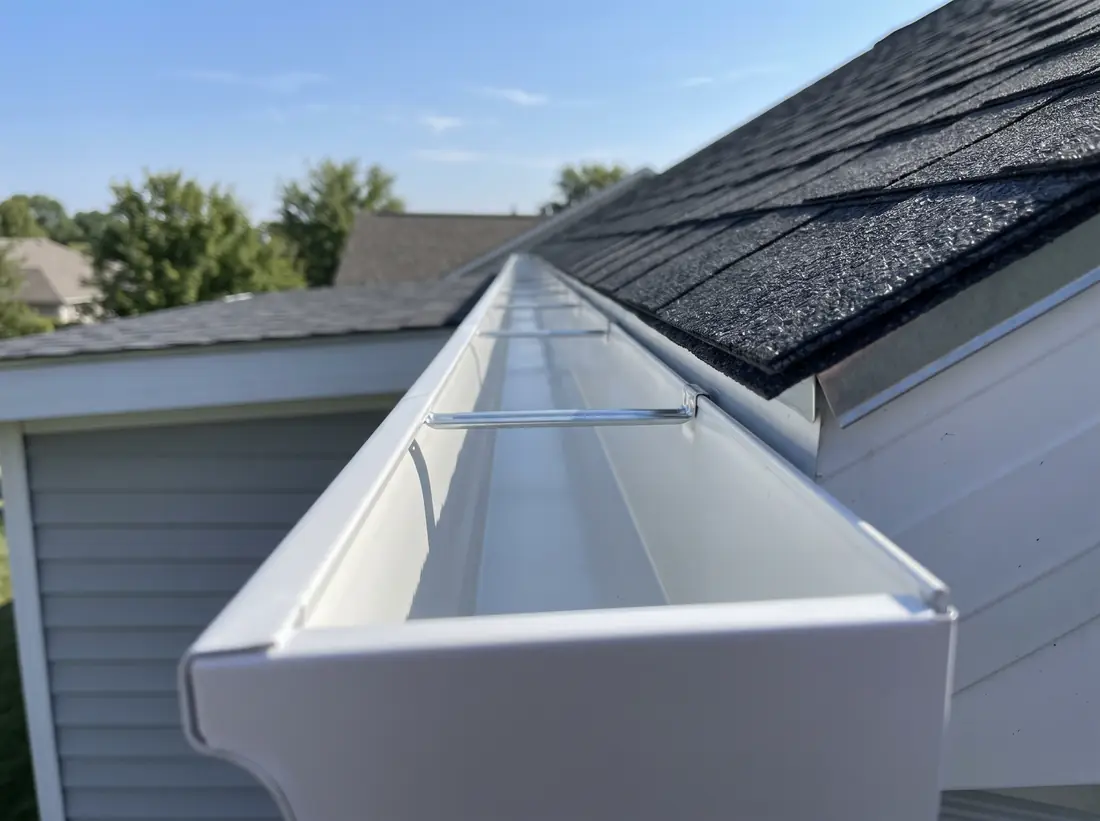
Aluminum is the default gutter metal in Central Virginia for good reasons. It does not rust, so it survives Richmond's humid summers and wet winters. It is light, so it does not overload old fascia. It comes as pre-painted coil that can be roll-formed into seamless runs in the driveway. And it costs a fraction of copper.
Aluminum specifications
| Spec | Options | What to know |
|---|---|---|
| Profile | K-style (ogee), half-round, box | K-style is standard on post-war houses |
| Size | 5, 6 inch; 7 inch on large roofs | 6-inch for steep and big roofs |
| Thickness | .025, .027, .032 inch | .027 common; .032 stiffer under trees and ice |
| Finish | Baked-on enamel, dozens of colors | Match trim, fascia or brick |
| Downspouts | 2x3, 3x4 rectangular; 3, 4 inch round | 3x4 for 6-inch gutters |
| Hangers | Hidden screw-in, aluminum or steel | 24 inches or closer |
How are aluminum gutters installed?
- Measure every run and plan outlets.
- Choose color and thickness of coil.
- Form seamless runs on site.
- Pitch and hang on hidden hangers screwed into sound fascia.
- Miter and seal corners; crimp and seal end caps.
- Fit downspouts with straps and extensions.
- Water-test each run.
Choosing a color
| House | Common choice |
|---|---|
| White or light siding, colonial in Henrico or Chesterfield | White or almond |
| Red brick ranch | White, bronze or a color matched to the brick on downspouts |
| Painted brick or dark trim | Black or dark bronze |
| Historic house with painted trim | A color that matches the trim or body, as the Commission of Architectural Review suggests for new gutters |
| New farmhouse-style build | Matte black |
Thickness matters under Richmond's trees
Willow oak is the most important street tree in the city by leaf area, and the suburbs add tulip poplars, sweetgums and pines. Wet leaves are heavy, ladders lean on gutters at every cleaning, and limbs fall in storms such as Isabel and the 2012 derecho. Ice adds more weight in winter storms like January 2026's. The .032-inch coil holds its shape better through all of that.
Aluminum vs other metals
| Metal | Lifespan | Cost | Rust | Notes |
|---|---|---|---|---|
| Aluminum | Long | Low to moderate | No | Standard choice |
| Galvanized steel | Moderate | Moderate | Yes, once scratched | Strong |
| Galvalume | Longer than galvanized | Moderate | Slower | Strong |
| Copper | Very long | High | No | Historic and estate homes |
| Vinyl | Short | Low | No | Sags in heat, cracks in cold |
See aluminum vs steel vs copper.
Caring for aluminum gutters
- Clean at least twice a year, more under oaks and pines.
- Keep ladders off the gutter lip; use a standoff.
- Reseal miters if they start to drip.
- Check hangers after ice or a big storm.
- Keep copper flashing and copper roof runoff away from aluminum.
Cost factors
- Coil thickness
- Size and profile
- Color (standard colors usually cost the same)
- Number of corners and downspouts
- Height and access
- Fascia repair
National guides put installed aluminum seamless gutters at roughly $9 to $13 a foot for 5-inch (Angi). See what gutters cost in Richmond.
How do you pick between .027 and .032-inch aluminum?
Thickness matters most where the gutter takes abuse. Under big oaks, where wet leaves sit in the trough and ladders lean on the lip at every cleaning, .032-inch holds its shape. On a long run between hangers it sags less. Where ice builds along the eave in mixed winter storms, it resists bending. The difference in price is small next to the total job.
| Situation | Suggested coil |
|---|---|
| One-story house, few trees | .027-inch |
| Two-story house, long runs | .032-inch |
| Under oaks, maples or pines | .032-inch |
| Where ladders lean on the gutter | .032-inch |
| Commercial or very large roofs | .032-inch or heavier box profiles |
Aluminum and older houses
Aluminum's light weight is an advantage on older fascia that cannot take much load. On historic houses, aluminum half-round in a color matched to the trim or body can be a comparable material for in-kind replacement under the city's guidelines, and costs much less than copper.
Keeping the finish
The baked-on finish lasts many years. Avoid wire brushes and harsh cleaners, keep copper runoff off it, and touch up scratches on the outer face with matching paint to keep the look even.