
On this page
How does micro-mesh work?
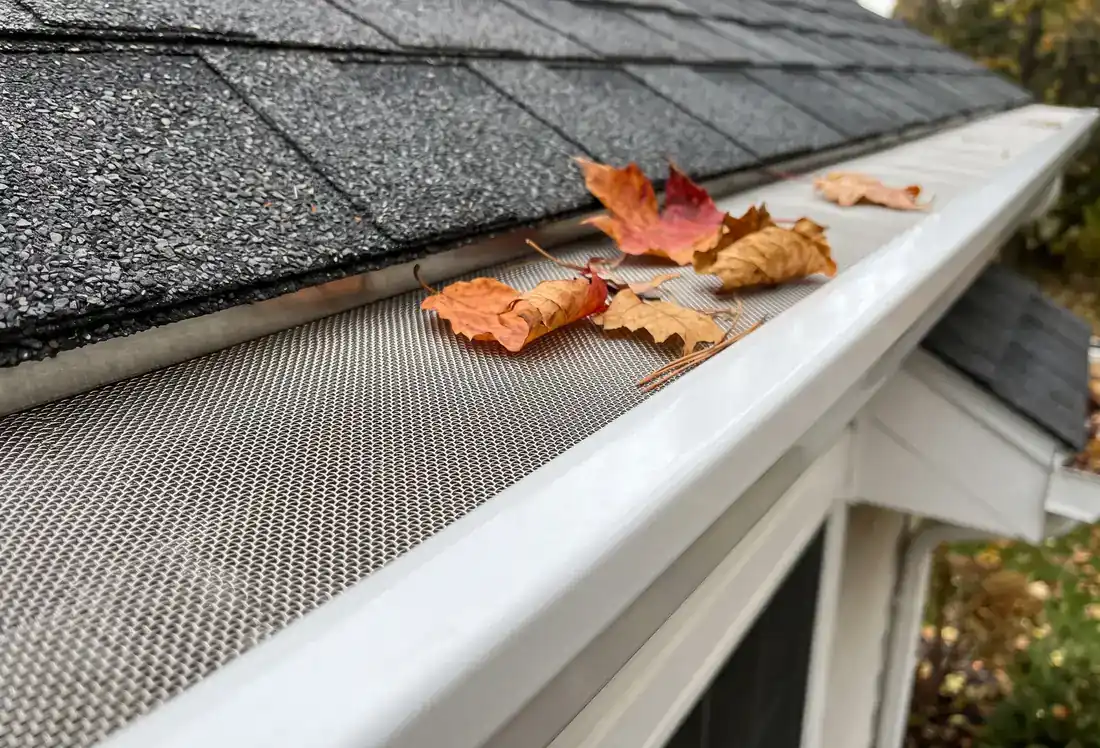
A micro-mesh guard has three parts: a stainless steel mesh with openings too small for most debris, a rigid aluminum frame that holds the mesh flat, and fasteners that tie it to the gutter. Rain hits the mesh, follows it by surface tension and drops through into the gutter. Leaves and seeds stay on top, dry out and blow off.
| Part | What to look for |
|---|---|
| Mesh | Stainless steel, not aluminum or plastic |
| Opening size | Fine enough to stop needles and seeds |
| Frame | Rigid aluminum that does not sag between hangers |
| Fastening | Screws into the gutter lip; tucked or fastened at the roof edge |
| Corners | Cut and fitted, not left open |
| Warranty | What is covered: clogging, materials, labor |
How are micro-mesh guards installed?
- Clean the gutters and flush the downspouts.
- Repair the system: loose hangers, sags and leaking miters first.
- Measure and cut panels to length.
- Fit the back edge under the first shingle course or to the roof edge.
- Screw the front edge to the gutter lip.
- Fit miters and end pieces at corners and ends.
- Water test from the roof.
What it keeps out in Richmond
| Tree | Debris | Micro-mesh result |
|---|---|---|
| Willow oak | Narrow leaves, catkins | Leaves stay out; catkin dust may need a rinse |
| Pin and red oak | Leaves, acorns | Stays out |
| Red and sugar maple | Leaves, winged seeds | Stays out |
| Sweetgum | Gumballs | Roll off |
| Tulip poplar | Big leaves, cones | Stay out |
| Loblolly pine | Needles | Stay out with fine mesh |
The Virginia Tech street tree assessment ranked sugar maple, willow oak, crape myrtle, red maple and pin oak as Richmond's most common street trees. Those, plus the tulip poplars, sweetgums and pines in the suburbs, are what a guard here has to handle.
Micro-mesh vs other guards
| Guard | Oak leaves | Seeds | Needles | Gumballs | Maintenance |
|---|---|---|---|---|---|
| Micro-mesh | Yes | Yes | Yes | Yes | Rinse or brush yearly |
| Perforated cover | Yes | Some pass | Some pass or stick | Yes | Moderate |
| Screen | Some pass | Pass | Pass | Yes | High |
| Reverse-curve | Yes | Some enter | Some enter | Yes | Clean the slot |
| Foam insert | Mostly | Trapped | Trapped | Yes | Replace inserts |
Micro-mesh in winter
In a storm like January 2026's, snow and sleet can sit on top of any guard. As it melts, water passes through the mesh into the gutter. Guards fitted to a properly pitched gutter shed meltwater better than guards on a flat or sagging one, and screw-down mesh resists the weight of ice better than snap-in screens.
Maintenance
- Look up after the main leaf drop; brush off any mat that stays wet.
- Rinse in late spring if pollen has filmed the mesh.
- Check downspouts once a year.
- Check fasteners after a big storm.
Cost factors
- Linear feet
- Number of corners and valleys
- Gutter repairs needed first
- Roof type and pitch
- Height and access
See are gutter guards worth it? and gutter guards.
How do you compare micro-mesh guards?
Look at four things. The mesh should be stainless steel, not aluminum or plastic, and fine enough to stop pine needles. The frame should be rigid aluminum that holds the mesh flat between hangers. The fastening should be screws into the gutter lip and a secure back edge, not snap-in clips that wind can lift. And the warranty should say what it covers: clogging, materials, labor, or only the panel.
| Feature | Better | Weaker |
|---|---|---|
| Mesh | Stainless, very fine | Aluminum or coarse |
| Frame | Rigid, ribbed aluminum | Thin or plastic |
| Fastening | Screwed front and back | Snap-in |
| Corners | Cut and fitted | Left open |
| Warranty | Clog and labor | Panel only |
Guards on two-story houses
The benefit of guards is largest where cleaning is hardest. On a two-story colonial, every cleaning means a long ladder at the eaves, often over a patio or landscaping. Fewer trips up the ladder is the main value, along with outlets that stay open in heavy rain.